The Method Of Connecting The Wire Of The Terminal
Nov 12, 2021
The connection between the terminal and the wire end is firm, which can reduce the touch resistance. When the wire has a threaded end with a multi-strand core, the wire end needs to be tightened before being connected to the terminal. Terminals and cords must not have loose, broken or exposed multi-strand cores. When connecting large cross-section aluminum wires with copper heads, use copper-aluminum transition joints. When connecting wires, it is necessary to clearly distinguish the phase of the terminal and the phase sequence of the wires before connecting. Conductors made of special materials such as aluminum cores and aluminum terminals need to remove the oxide layer, and the terminals and the conductor insulation layer need to maintain a certain distance.
The winding terminal directly surrounds the wire on the winding post of the corner touch piece. When wrapping, wrap the wire under controlled tension, press in and fix it on the corner of the surrounding column of the touch piece to form an airtight touch. There are several requirements for the winding wire: the nominal value of the wire diameter should be within the range of 0.25 mm ~ 1.0 mm; when the wire diameter is not greater than 0.5 mm, the copyright of the control engineering network belongs to it, and the elongation rate of the wire material is not less than 15 %; When the diameter of the conductor is greater than 0.5 mm, the copyright of the control engineering network belongs to it, and the elongation rate of the conductor material is not less than 20%. The wrapping tool includes a wrapping gun and a fixed winding machine. The terminals are connected by screws. Lianjie Electric reminds you to pay attention to the maximum and minimum cross-sections of the connection cables and the allowable tightening torque of screws of different standards.
The terminal block should have considerable stability in order to control the safe transmission of the resistor. The touch value between the terminal and the resistor is directly related to the service life of the terminal. If the resistance is too large, the terminal itself will be discolored, and the heat and voltage will cause the protective film outside the terminal to burn out, causing serious internal damage. The use range of the terminal block is getting wider and wider, and the variety is also increasing. At present, in addition to printed circuit board terminals, there are hardware terminals, nut terminals, and spring terminals. In the power industry, there are special wiring boards and junction boxes. They are all wiring terminals, single-layer, double-layer, current, voltage, etc.
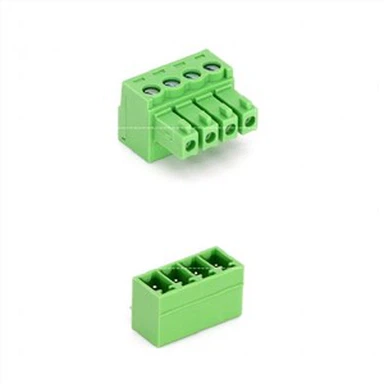
The terminal is actually a piece of metal encapsulated in insulating plastic, with holes on both ends for piercing the wires, and screws for fastening or loosening. For example, sometimes it is necessary to connect or disconnect two wires. At this point, the terminals can be used to connect them, and they can be disconnected at any time without having to weld or wrap them together. Mounting lugs can be added at both ends of the terminal socket, which can protect the lugs to a large extent and prevent the lugs from being arranged in bad positions. At the same time, this socket design can ensure that the socket can be inserted into the mother body correctly. The socket can also have installation and confirmation buckles. The mounting buckle can be more firmly fixed on the printed circuit board, and after the installation is completed, the buckle can confirm the female body and the socket. Various socket designs can be matched with the different penetration methods of the matrix, such as horizontal, straight or skewed printed circuit boards. Can choose different methods according to customer requirements.