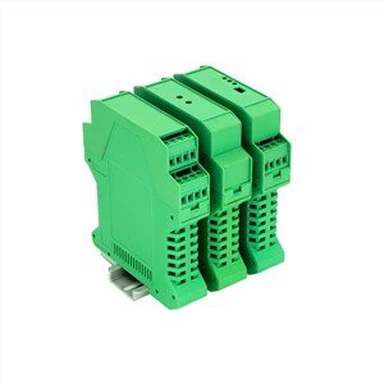
Why Does The Terminal Block Turn Black
Nov 20, 2021
Improper use of the terminal block will cause blackening if burned. We all know that terminal blocks are the main equipment for current and power transmission, especially cables and wires, which are commonly used accessories. Because of this, if there is a problem with power and current, such as high temperature, it will cause the terminal to burn, and then it will turn black and lose the role of long-term power transmission power.
The blackening of the terminals may also be due to oxidation caused by bad gas touch. Terminals are conductor products. If they are used, they will react with gases that should not be touched, and then affect their oxidation and blackening effects. This is also the most common blackening condition. Relatively speaking, this is a relatively safe phenomenon, as long as you pay attention to stay away from those undesirable gases and avoid oxidation, such as sealing the terminal.
The optimization of the appearance function of the terminal block can be done in two ways. One is the planning of the connector to establish and maintain a stable terminal touch interface. The second is to establish a metallic touch, which requires that any outer film layer does not exist or will break during the insertion process. There is no difference between the two ways of film and film breaking, that is, the difference between precious metal coating and non-precious metal coating. Noble metal plating, such as gold, palladium and their alloys, is lazy and has no coating. Therefore, for these appearance treatments, metal touch is "automatic". What we need to consider is how to keep the "noble" appearance of the terminal free from external factors such as pollution, substrate dispersion, and terminal corrosion.