

What materials are used to make Pcb Direct Welding Terminal Block?
May 27, 2025
As a supplier of PCB Direct Welding Terminal Blocks, I am often asked about the materials used in their production. These terminal blocks play a crucial role in electrical connections on printed circuit boards (PCBs), and the choice of materials significantly impacts their performance, durability, and safety. In this blog post, I will delve into the various materials commonly used to make PCB Direct Welding Terminal Blocks, highlighting their properties and advantages.
Conductive Materials
The conductive materials in PCB Direct Welding Terminal Blocks are responsible for carrying electrical current. The most commonly used conductive materials are copper and brass, each with its own set of characteristics.
Copper
Copper is a highly conductive metal, making it an ideal choice for electrical applications. It has excellent electrical conductivity, thermal conductivity, and corrosion resistance. In PCB Direct Welding Terminal Blocks, copper is often used for the contact parts, such as the terminals and conductors. Its high conductivity ensures minimal power loss and efficient current transfer, which is essential for the proper functioning of the electrical circuit.

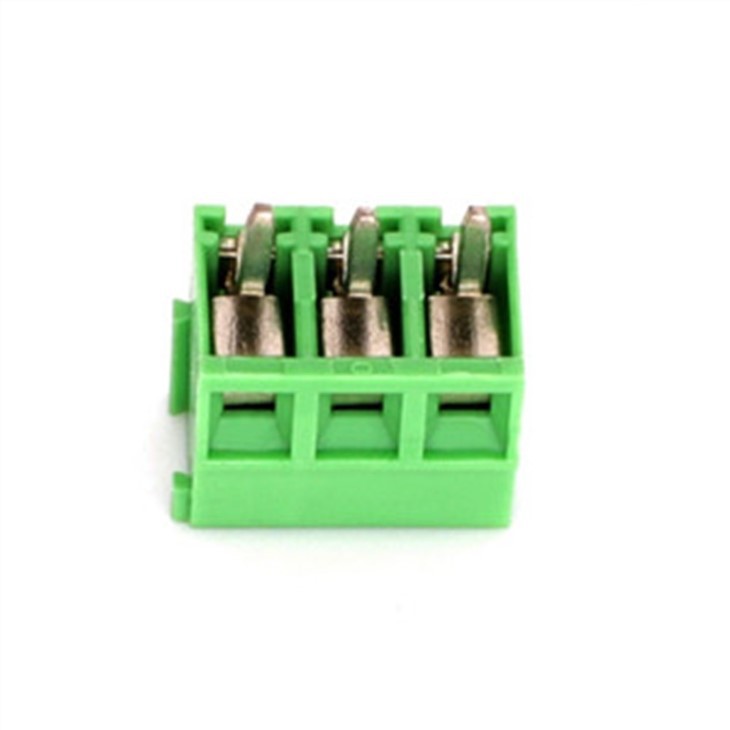
Moreover, copper is relatively soft and malleable, which allows for easy forming and shaping during the manufacturing process. This makes it possible to create complex terminal designs that can accommodate different wire sizes and connection requirements. Copper also has good solderability, which means it can be easily soldered to the PCB, ensuring a reliable and stable connection.
Brass
Brass is an alloy of copper and zinc, and it is another popular choice for conductive parts in PCB Direct Welding Terminal Blocks. Brass offers a good balance between conductivity and mechanical strength. It has lower conductivity than pure copper but is more resistant to wear and tear, making it suitable for applications where the terminals may be subject to repeated plugging and unplugging.
Brass also has good corrosion resistance, especially in environments with moderate humidity and chemical exposure. It can be easily machined and plated to enhance its appearance and performance. For example, brass terminals can be plated with nickel or tin to improve their solderability and protect them from oxidation.
Insulating Materials
Insulating materials are used to prevent electrical current from flowing between different conductive parts of the terminal block and to protect the user from electric shock. The choice of insulating material depends on factors such as the operating voltage, temperature range, and environmental conditions.
Polyamide (Nylon)
Polyamide, commonly known as nylon, is a widely used insulating material in PCB Direct Welding Terminal Blocks. It has excellent mechanical properties, including high strength, toughness, and resistance to abrasion. Nylon also has good electrical insulation properties, making it suitable for applications with moderate to high voltages.
One of the key advantages of nylon is its high heat resistance. It can withstand temperatures up to 150°C without significant degradation, which makes it suitable for use in environments where the terminal block may be exposed to high temperatures. Nylon is also resistant to many chemicals, including oils, greases, and solvents, which enhances its durability in harsh industrial environments.
Polycarbonate
Polycarbonate is another popular insulating material due to its excellent transparency, high impact resistance, and good electrical insulation properties. It has a high heat deflection temperature, which means it can maintain its shape and properties at elevated temperatures. Polycarbonate is also flame retardant, which is an important safety feature in electrical applications.
In addition to its mechanical and electrical properties, polycarbonate is easy to mold and can be used to create complex shapes and designs. This allows for the production of terminal blocks with features such as integrated strain relief and wire guides, which improve the reliability and ease of use of the terminal block.
Phenolic Resin
Phenolic resin is a thermosetting plastic that is known for its excellent electrical insulation, heat resistance, and mechanical strength. It is often used in high-voltage applications where the terminal block needs to withstand high temperatures and electrical stresses. Phenolic resin is also resistant to arc tracking, which is a phenomenon where an electrical arc forms on the surface of the insulating material and can lead to short circuits and equipment damage.
Phenolic resin terminal blocks are typically more expensive than those made from other insulating materials, but their superior performance and reliability make them a preferred choice in critical applications, such as power distribution and industrial control systems.
Plating Materials
Plating is a process used to apply a thin layer of metal onto the surface of the conductive parts of the terminal block. The plating material serves several purposes, including improving the solderability, corrosion resistance, and appearance of the terminals.
Tin
Tin is one of the most commonly used plating materials in PCB Direct Welding Terminal Blocks. It has good solderability, which means it can be easily soldered to the PCB and the wires. Tin also provides a protective layer that prevents the underlying metal from corroding. Tin-plated terminals are commonly used in low-cost applications where good solderability and basic corrosion protection are required.
Nickel
Nickel plating is often used as an intermediate layer between the base metal and the final plating material. It provides excellent corrosion resistance and can act as a barrier to prevent the diffusion of copper into the solder joint, which can improve the long-term reliability of the connection. Nickel-plated terminals are commonly used in applications where the terminal block may be exposed to harsh environmental conditions or where a high level of corrosion resistance is required.
Gold
Gold plating is the most expensive plating option but offers the highest level of performance. Gold has excellent electrical conductivity, corrosion resistance, and solderability. It is also resistant to oxidation and tarnishing, which ensures a stable and reliable connection over a long period of time. Gold-plated terminals are commonly used in high-end applications, such as aerospace, telecommunications, and medical devices, where reliability and performance are critical.
Conclusion
In conclusion, the materials used to make PCB Direct Welding Terminal Blocks are carefully selected to ensure optimal performance, durability, and safety. Conductive materials such as copper and brass provide efficient current transfer, while insulating materials like polyamide, polycarbonate, and phenolic resin prevent electrical leakage and protect the user. Plating materials such as tin, nickel, and gold enhance the solderability, corrosion resistance, and appearance of the terminals.
As a supplier of Direct Welding Pluggable Connector for PCB, PCB Direct Welding Terminal Block, and Direct Welding Terminal Blocks, we are committed to using high-quality materials and advanced manufacturing processes to produce terminal blocks that meet the highest standards of quality and performance. If you are interested in our products or have any questions about the materials used in our terminal blocks, please feel free to contact us for a detailed discussion and to start the procurement negotiation process.
References
- Groover, M. P. (2010). Fundamentals of Modern Manufacturing: Materials, Processes, and Systems. Wiley.
- ASM Handbook Committee. (2001). ASM Handbook, Volume 1: Properties and Selection: Irons, Steels, and High-Performance Alloys. ASM International.
- Madou, M. J. (2002). Fundamentals of Microfabrication: The Science of Miniaturization. CRC Press.