

How to reduce the contact resistance of a plug in terminal block for PCB?
May 29, 2025
Reducing the contact resistance of a plug-in terminal block for PCB is a crucial aspect in electrical and electronic applications. As a supplier of Plug In Terminal Block For PCB, I understand the significance of this issue and have accumulated a wealth of knowledge and experience in this field. In this blog, I will share some effective methods to achieve lower contact resistance, which can improve the performance and reliability of your electrical connections.
Understanding Contact Resistance in Plug-In Terminal Blocks
Before delving into the methods of reducing contact resistance, it's essential to understand what contact resistance is and what factors influence it. Contact resistance is the resistance that occurs at the interface between two conductors in contact. In the case of a plug-in terminal block for PCB, it is the resistance between the plug and the socket, or between the wire and the terminal.
Several factors can affect contact resistance. Surface conditions play a vital role. Oxidation, contamination, or roughness on the contact surfaces can increase resistance. The contact pressure also matters. Insufficient pressure may lead to poor contact and higher resistance, while excessive pressure can damage the contact surfaces. Additionally, the material properties of the conductors, such as conductivity and hardness, can influence the contact resistance.
Selecting High - Quality Materials
One of the fundamental steps in reducing contact resistance is to select high - quality materials for the plug - in terminal block. For the contact parts, materials with high electrical conductivity are preferred. Copper and its alloys are commonly used due to their excellent conductivity. For example, phosphor - bronze is a popular choice as it combines good conductivity with high mechanical strength and corrosion resistance.
When choosing materials, it's also important to consider their resistance to oxidation. Some metals tend to form oxide layers on their surfaces over time, which can increase contact resistance. By using materials with better oxidation resistance or applying anti - oxidation coatings, we can maintain low contact resistance. For instance, silver - plated contacts are often used because silver has very high conductivity and forms a relatively thin and conductive oxide layer compared to other metals.
Improving Surface Finish
The surface finish of the contact parts has a significant impact on contact resistance. A smooth and clean surface reduces the contact area where the resistance occurs. During the manufacturing process, proper machining and finishing techniques should be employed.

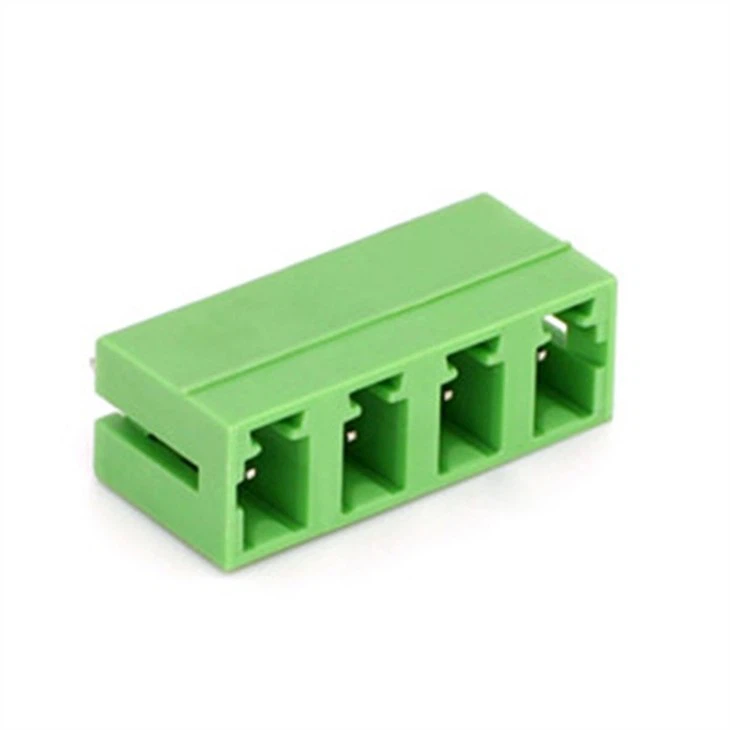
Polishing the contact surfaces can remove any rough edges or irregularities, which helps to increase the effective contact area between the conductors. For example, precision grinding or lapping can be used to achieve a high - quality surface finish. Additionally, cleaning the contact surfaces thoroughly before assembly is crucial. This can remove any contaminants, such as dust, grease, or metal shavings, that may increase resistance. Ultrasonic cleaning is an effective method for removing contaminants from the contact surfaces.
Ensuring Adequate Contact Pressure
Contact pressure is a key factor in reducing contact resistance. Adequate pressure ensures a good electrical connection between the conductors. In plug - in terminal blocks, different mechanisms are used to provide contact pressure.
Spring - type terminal block connectors are an excellent solution for maintaining consistent contact pressure. The spring in these connectors exerts a constant force on the contact surfaces, compensating for any minor changes in the contact conditions, such as thermal expansion or vibration. You can learn more about Spring Type Terminal Block Connector.
Another way to ensure proper contact pressure is through the design of the plug - in mechanism. The geometry of the plug and socket should be carefully designed to provide a tight fit. For example, a tapered or stepped design can help to gradually increase the contact pressure as the plug is inserted into the socket.
Preventing Oxidation and Contamination
Oxidation and contamination can significantly increase contact resistance over time. To prevent oxidation, protective coatings can be applied to the contact surfaces. As mentioned earlier, silver plating is a common anti - oxidation measure. In addition, some manufacturers use special passivation treatments to form a thin, protective layer on the metal surface.
To prevent contamination, proper packaging and handling are essential. Terminal blocks should be packaged in clean, sealed containers to prevent dust and moisture from reaching the contact surfaces. During installation and use, it's important to keep the working environment clean. For example, in industrial settings, dust - proof enclosures can be used to protect the terminal blocks from airborne particles.
Regular Maintenance and Inspection
Even with high - quality materials and proper design, regular maintenance and inspection are necessary to ensure low contact resistance. Periodic inspections can detect any signs of oxidation, contamination, or mechanical damage.
If oxidation is detected, the contact surfaces can be cleaned and re - treated. For example, a mild abrasive can be used to remove the oxide layer carefully. In case of mechanical damage, such as a deformed contact part, it should be replaced immediately.
Testing and Quality Control
During the manufacturing process, rigorous testing and quality control are essential to ensure that the plug - in terminal blocks meet the required contact resistance standards. Various testing methods can be used, such as the four - wire resistance measurement method. This method can accurately measure the contact resistance by eliminating the influence of the test lead resistance.
In addition to electrical testing, mechanical tests should also be performed to ensure that the contact pressure and the plug - in force are within the specified range. By implementing strict quality control measures, we can guarantee that only terminal blocks with low contact resistance are delivered to our customers.
Conclusion
Reducing the contact resistance of a plug - in terminal block for PCB is a multi - faceted process that involves material selection, surface finish improvement, contact pressure control, oxidation and contamination prevention, maintenance, and quality control. As a supplier of PCB Electric Pluggable Terminal Block and Plug In Screwless Connector for Electric, we are committed to providing high - quality products with low contact resistance.
If you are in need of plug - in terminal blocks for your PCB applications and want to ensure reliable and efficient electrical connections, we invite you to contact us for procurement and further discussion. We have a professional team ready to provide you with the best solutions tailored to your specific requirements.
References
- Grover, F. W. (1962). Inductance Calculations: Working Formulas and Tables. Dover Publications.
- Fischer - Cripps, A. C. (2004). Introduction to Contact Mechanics. Springer.
- Das, S. K. (2008). Electrical Contacts: Principles and Applications. CRC Press.