

Can PCB electric pluggable connectors be used in harsh industrial environments?
Jul 23, 2025
Hey there! As a supplier of PCB electric pluggable connectors, I often get asked if these connectors can hold up in harsh industrial environments. Well, let's dive right into it and find out.
First off, what exactly do we mean by "harsh industrial environments"? These are places where conditions are tough on equipment. Think extreme temperatures, high humidity, lots of dust and dirt, vibrations, and even exposure to chemicals. Factories, mines, outdoor power plants, and automotive manufacturing facilities are all examples of such places.
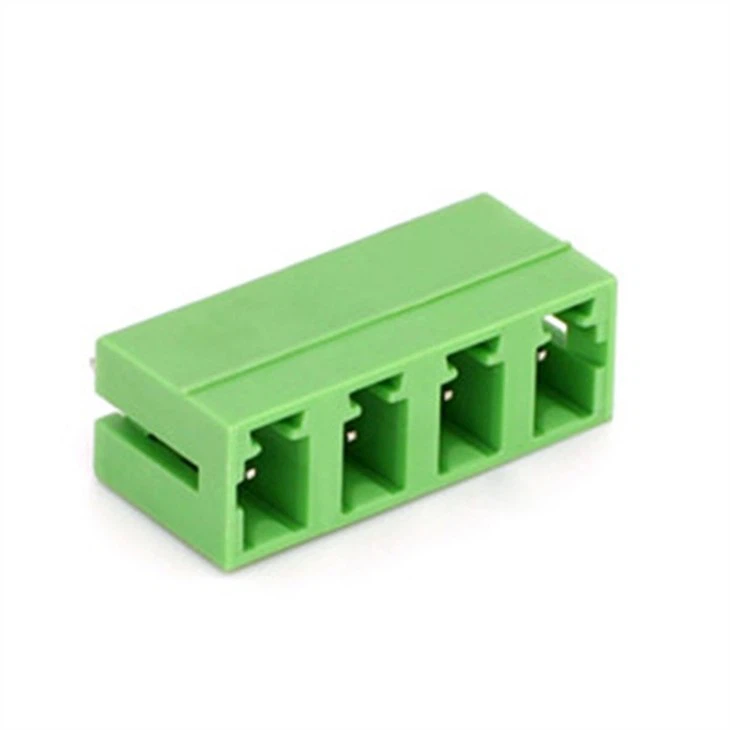
Now, let's talk about PCB electric pluggable connectors. These connectors are super handy. They make it easy to connect and disconnect electrical circuits on a printed circuit board (PCB). You don't have to solder everything in place, which saves time and makes it easier to replace parts if something goes wrong. There are different types, like the Plug In Terminal Block for PCB, PCB Electric Pluggable Terminal Block, and PCB Spring Type Pluggable Terminal Block. Each type has its own features and benefits, but the question is, can they handle the rough stuff in industrial settings?
Temperature Resistance
One of the biggest challenges in harsh industrial environments is temperature. Some places can get really hot, like near furnaces or in direct sunlight, while others can get freezing cold, especially in unheated storage areas or outdoor installations.
Most high - quality PCB electric pluggable connectors are designed to handle a wide range of temperatures. They're made from materials that can expand and contract with temperature changes without breaking or losing their electrical conductivity. For example, the plastics used in the connector housings are often engineered to have a high heat - deflection temperature. This means they won't melt or deform easily when it gets hot.
On the cold side, the connectors need to stay flexible. If they become too brittle, they can crack when you try to plug or unplug them. Good connectors are tested at low temperatures to make sure they can still function properly. So, in terms of temperature, many of our PCB electric pluggable connectors can definitely handle the heat and the cold in industrial environments.
Humidity and Moisture
Humidity and moisture are also big problems in industrial areas. High humidity can cause corrosion on the metal parts of the connectors. If the contacts corrode, the electrical connection can become poor, leading to signal loss or even complete failure.
To combat this, our connectors are often coated with special materials. These coatings act as a barrier between the metal and the moisture in the air. Some connectors are also designed to be sealed. This means they can prevent water from getting inside and causing damage. For example, we have some connectors with gaskets that create a tight seal when they're plugged in. So, even in a damp factory or an outdoor area with lots of rain, our connectors can keep working.
Dust and Dirt
Dust and dirt are everywhere in industrial environments. They can get into the connectors and interfere with the electrical contacts. If enough dust builds up, it can create a layer of insulation between the contacts, preventing the flow of electricity.
Our PCB electric pluggable connectors are designed with features to keep dust out. Some have covers or shields that protect the contacts. Others are made with a self - cleaning mechanism. When you plug and unplug the connectors, the action helps to remove any dust or dirt that might have accumulated on the contacts. So, even in a dusty mine or a factory with lots of airborne particles, our connectors can maintain a good electrical connection.
Vibrations
Vibrations are common in industrial machinery. Constant shaking can cause the connectors to loosen over time. If the connectors aren't secure, the electrical connection can be interrupted.
To deal with vibrations, our connectors are often designed with locking mechanisms. These mechanisms hold the connectors firmly in place, preventing them from coming loose. For example, some connectors have screw - down locks or snap - on features that keep them attached to the PCB. So, in a noisy factory with lots of moving equipment, our connectors can stay put and keep the electrical circuits working.
Chemical Exposure
In some industrial environments, connectors may be exposed to chemicals. These chemicals can corrode the metal parts and damage the plastic housings.
We offer connectors that are made from chemical - resistant materials. The metals are often treated to resist corrosion, and the plastics are chosen for their ability to withstand chemical exposure. Before we sell a connector, we test it in different chemical environments to make sure it can hold up. So, even in a chemical plant or a laboratory where there are strong chemicals, our connectors can still function properly.
Real - World Examples
I've seen our PCB electric pluggable connectors in action in many industrial settings. For example, in an automotive manufacturing plant, the connectors are used in the assembly line. They have to deal with the heat from welding machines, the vibrations from moving conveyor belts, and the dust from the metal - working processes. Despite these harsh conditions, our connectors have been working reliably for years.
In a power generation plant, the connectors are used in the control systems. They're exposed to high temperatures, humidity, and electrical interference. But because of their robust design, they've been able to maintain a stable electrical connection, ensuring the safe and efficient operation of the plant.

Conclusion
So, can PCB electric pluggable connectors be used in harsh industrial environments? The answer is a big yes! Our connectors are designed and tested to handle the extreme conditions found in industrial areas. They can resist temperature changes, humidity, dust, vibrations, and chemical exposure.
If you're in the market for high - quality PCB electric pluggable connectors for your industrial applications, we'd love to hear from you. Whether you need a Plug In Terminal Block for PCB, a PCB Electric Pluggable Terminal Block, or a PCB Spring Type Pluggable Terminal Block, we have the right solution for you. Contact us to start a conversation about your specific needs and let's find the perfect connectors for your project.
References
- Industrial Connector Handbook, various industry - specific publications
- Test reports on temperature, humidity, dust, vibration, and chemical resistance of PCB electric pluggable connectors.